Turkish Mosaic Lamps, a Short History and the Main Types
The lamps are older than any souvenir shop. Here is a short history of the Ottoman craft of coloured light, and a guide to the types you will see.
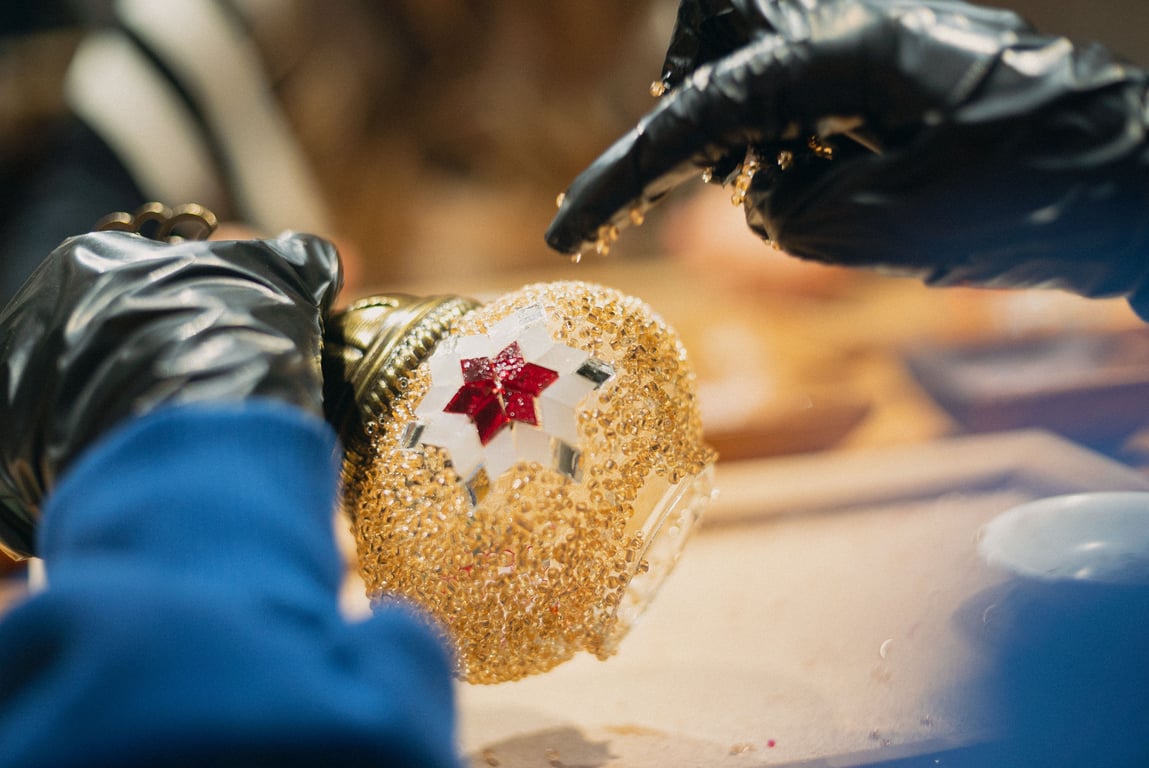
The Turkish mosaic lamp descends from the Ottoman craft of setting small pieces of coloured glass into shades that scatter warm, patterned light. Its roots reach back centuries. They go to the glass and tile workshops of Istanbul and the wider Ottoman world, where artisans learned to turn light itself into decoration for homes, bathhouses, and mosques. What is sold today as a souvenir is the living end of a very old tradition.
Where the craft comes from
Ottoman craftsmen were masters of coloured glass long before electric light. They set glass into lamps and windows, so that daylight, or the flame of an oil lamp, broke into colour as it passed through. The geometry was never random. It followed the same language of interlocking stars and polygons found in Ottoman tilework, woodwork, and manuscript illumination. A mosaic lamp is that geometry rendered in light.
The colours mattered as much as the pattern. Amber and gold gave warmth, cobalt and turquoise gave depth, and ruby gave intensity. It is the same palette a maker chooses from today. If you want to go deeper on that, see what the colours mean.
How the lamps are made
The method has changed little. Pieces of coloured glass and beads are set by hand onto a clear glass shade, the gaps are filled, and the shade is fitted to a base and lit from within. It is patient, additive work, closer to a small stained-glass window than to any factory process. We cover the full sequence in how Turkish mosaic lamps are made.
The main types you will see
Mosaic lamps come in several forms, and each suits a different place in a room:
- Hanging pendant lamps. A single mosaic globe or teardrop on a chain, the classic ceiling piece. In pairs or clusters they become a chandelier.
- Table lamps. A mosaic shade on a short brass stand. This is the most popular size to make in a workshop, and the easiest to carry home.
- Floor lamps. A tall stand with one or more large shades, a statement piece for a corner.
- Chandeliers. Many shades arranged on a branched brass frame, the grandest form, often seen in restaurants and hotels.
- Candle holders. A smaller mosaic vessel lit by a tea light rather than a bulb, the simplest form and a common first project.
Mosaic lamp, Turkish lamp, Moroccan lamp: what is the difference?
The terms Turkish lamp and Turkish mosaic lamp usually mean the same object, a shade of hand-set coloured glass. Moroccan lamps are different. They are more often pierced metal, such as brass or copper, that throws shadow patterns rather than coloured light, sometimes with a little coloured glass inset. The quickest tell is the light. A Turkish mosaic lamp glows in colour, while a Moroccan lantern casts patterned shadow.
Making one yourself
The best way to understand the craft is to make a piece of it. In our Turkish mosaic lamp workshop in Istanbul you make a table lamp from an empty shade to a lit, wrapped lamp in about three hours. It is the same method, the same geometry, and the same palette the tradition has used for generations.