How Turkish Mosaic Lamps Are Made, Step by Step
Every Turkish mosaic lamp is built by hand, one small piece of coloured glass at a time. Here is exactly how it happens.
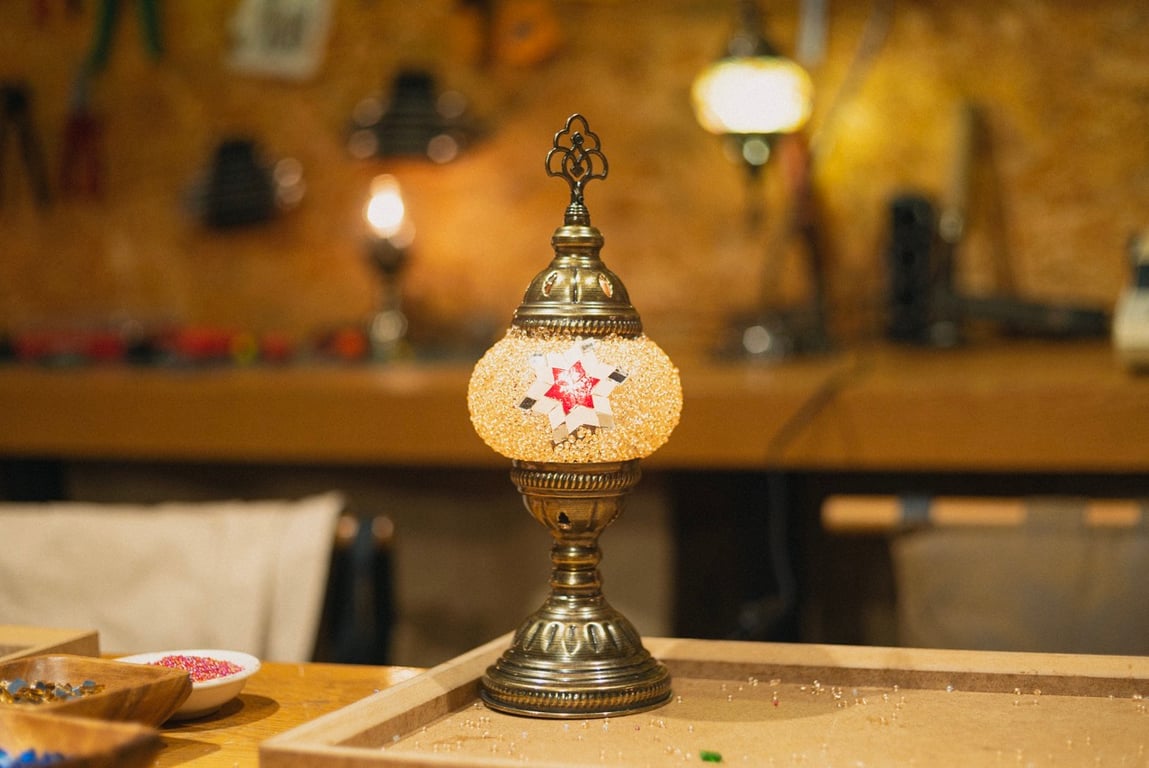
A Turkish mosaic lamp is made by hand-setting dozens of small pieces of coloured glass and beads onto a clear glass shade. You place them one at a time, until the pattern is complete and the shade can be lit from within. There is no mould, no printing, and no shortcut. The glow you see is the sum of every piece an artisan, or a first-timer in a workshop, placed by hand.
That is the short answer. The longer one is more interesting, because the making is the whole point.
The materials: glass, beads, and a glass sphere
Everything starts with the raw material. An artisan works from trays of coloured glass in dozens of shades, plus small glass beads that catch the light at the seams. The shade itself is a clear glass form, most often a sphere or a teardrop, and it acts as the canvas. A brass base and an electrical fitting then turn the finished shade into a working lamp.
In a hands-on workshop you choose from more than forty-five colours. Nothing is pre-selected for you. The palette is yours from the first minute.
Step 1: choosing the colours
Before a single piece is placed, you settle on a palette. This matters more than it sounds. Each colour behaves differently once the lamp is lit. Amber warms a room, cobalt cools it, and ruby sets it alight. So the choice is really a decision about what kind of light you want to live with. An artisan helps you read the classic geometry, so your colours hold together rather than fight.
Step 2: setting the glass by hand
This is the heart of the making. Working on the glass sphere, you place each piece of glass and each bead into the pattern by hand, then fix it in position. The work is slow, absorbing, and meditative. It is closer to assembling a small stained-glass window than to any craft kit. A traditional pattern follows the geometry Istanbul has used for centuries. The pieces are set tightly, so that once lit, the light reads as a single living glow rather than scattered dots.
For a full lamp this stage takes the better part of a session. It cannot be rushed, and that is exactly why people find it calming.
Step 3: grouting and the beadwork
Once the glass is set, the gaps between the pieces are filled. Then the beadwork along the rim and seams is finished. The beads do real work. They hide the joins, and they add a second layer of sparkle where two colours meet. This is the step that turns a mosaic surface into something that looks intentional and whole.
Step 4: fitting the base and the first light
The finished shade is fitted to its brass base and wired to a bulb. Then comes the moment the whole afternoon builds toward. The lamp is switched on and lit for the first time. The colours you chose hours earlier come alive at once, and they throw patterned light across the table and the wall behind it. This is the part people photograph.
Do you need any experience?
No. Turkish mosaic lamp making is patient work with close guidance, which is why complete beginners finish lamps they are genuinely proud of. Children and adults sit at the same table. The skill is not in the hand but in the looking, and the artisan does the teaching as you go.
How long does it take to make one?
In a workshop setting, making a mosaic lamp from an empty shade to a lit, wrapped lamp takes about three hours. That includes the welcome, the story of the craft, choosing colours, setting the glass, and the first lighting. A master artisan working alone can move faster, while a first-timer savours it. Either way, you carry the finished lamp home the same day.
Making one yourself in Istanbul
Reading about the craft is one thing. Setting the glass yourself is another. If you want to make your own, our Turkish mosaic lamp workshop in Istanbul walks you through every step above in a small group. All materials, tools, and unlimited Turkish coffee are included, and you leave with a lit lamp wrapped for the journey home. You can also read more about where the craft comes from.