What the Colours of a Turkish Mosaic Lamp Mean
Amber warms a room. Cobalt cools it. Ruby sets it alight. A short guide to reading the colours before you choose your own.
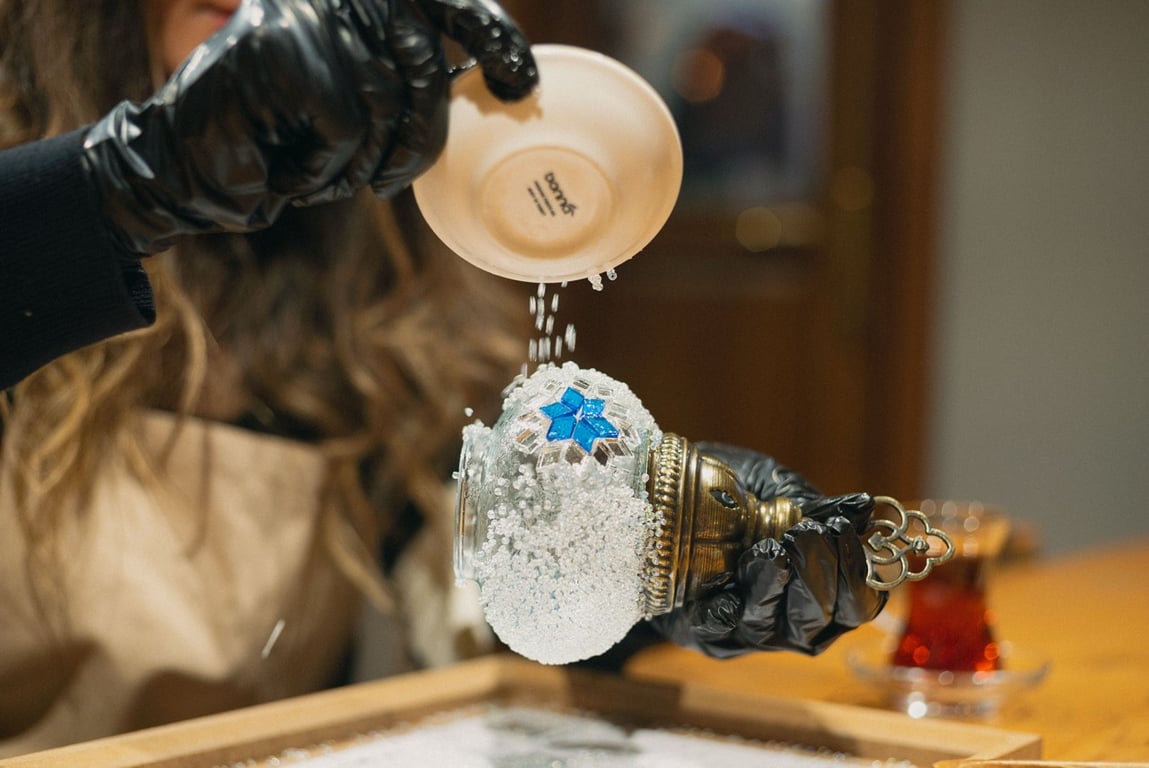
The colours of a Turkish mosaic lamp are chosen for how they behave once the lamp is lit. A pane of glass looks flat and dark on the tray. The moment light passes through it, though, it turns warm, deep, or electric. So choosing a palette is really choosing what kind of light you want to fill a room.
There is no fixed code here. No single colour carries one strict meaning. The tradition is about feeling and light, not symbols you have to memorise. Still, every colour has a character. Reading those characters is what lets you compose a lamp that feels whole.
Amber and gold: warmth
Amber makes a mosaic lamp feel like candlelight. Lit, it throws a soft golden wash that warms everything around it. Gold beads along the seams add a glint that catches the eye. If you want a lamp that feels cosy and traditional, build around amber.
Cobalt and turquoise: depth and calm
Blues do the opposite of amber. They cool the light and deepen it. Cobalt reads as rich and nocturnal, the colour of Iznik tile and the Bosphorus at dusk. Turquoise is lighter and more serene, a colour long loved across Anatolia. Together, blues give a lamp poise, and they keep a warm palette from becoming heavy.
Ruby and red: intensity
Ruby is the colour that sets a lamp alight. Lit from within, red glass glows with an intensity no other colour matches. Even a few pieces will pull the eye straight to them. Use it generously and you get a bold, dramatic lamp. Use it sparingly and it becomes an accent that lifts the whole pattern.
Emerald and green: balance
Green sits between the warm and cool families. It quietly holds a palette together. Emerald glows jewel-deep once lit, while softer greens read as fresh and natural. Think of green as the peacemaker. It lets amber and cobalt share a lamp without clashing.
Amethyst and purple: richness
Purple is the rarest note and the most regal. A little amethyst among warmer colours adds richness and a sense of the antique. It echoes the deep dyes of Ottoman textiles. Purple rewards restraint, so a few pieces do more than a whole field.
How to choose your own palette
A few simple ideas go a long way:
- Pick one lead colour for the mood. Amber for warmth, cobalt for calm, or ruby for drama. Let it dominate.
- Add a contrast from the opposite family so the light has tension. A warm lead wants a cool accent, and the reverse works too.
- Use beads and gold at the seams to tie unrelated colours together.
- Trust the geometry. The classic patterns are built so that dozens of small colours resolve into a single glow.
You do not have to get this right alone. In a mosaic lamp workshop the artisan helps you read your colours against one another as you go. That way the lamp you carry home is one you actually love, not a happy accident. If you want to understand where the tradition of coloured light comes from first, start with the story of the craft.